Stop managing tickets. Start resolving requests.
Find out how 96% of repair requests can be resolved without any follow-up questions by looking at the examples from Hanwag, ORTLIEB, SPORT 2000 GmbH, and Penguin.
Process Automation


Rebecca Müller
Head of Customer Service at ORTLIEB
"Both in the initial Gap Audit and in the ongoing Optimisation packages, simplysolve has helped us find new ways to automate our processes and save costs."
Benefit: Process Automation
Many companies confuse digitalisation with process automation. However, a digital form alone does not resolve a case. As long as someone has to review each request manually and on a case-by-case basis, the effort and follow-up questions will remain.
The real levers to success are structure and automation: With simplysolve, requests are captured digitally and resolved immediately thanks to a well-thought-out structure and predefined rules. This takes the pressure off customer service teams, allowing them to focus on complex cases.
Read how these companies successfully automated their service processes:




From cost trap to margin gain

What was once a fully manual, in-store-only process is now digital and largely automated. Retailers can offer repair and cleaning services to their customers online and offline, in one seamless process with shipping, payment and status updates included.

CHALLENGE
Offline Handling
Because of the logistical effort and handling required at the retailer, repair and cleaning services incurred high costs, making it an unattractive business model from a margin perspective.
BENEFIT
Online Flow
An intelligent online flow maps the entire repair and cleaning process from start to finish and brings in the necessary external partners, so customers can book a repair or cleaning themselves with full cost transparency.
CHALLENGE
Hard-to-Market Services
Retailers struggle to promote extra services like cleaning and care effectively. Without the right touchpoint, customers rarely know these services exist.
BENEFIT
Upselling
Cleaning and care can be added to any repair request with one click. Moreover, customisations are an opportunity for extra revenue while increasing order rates.

Clear rules instead of case-by-case decisions

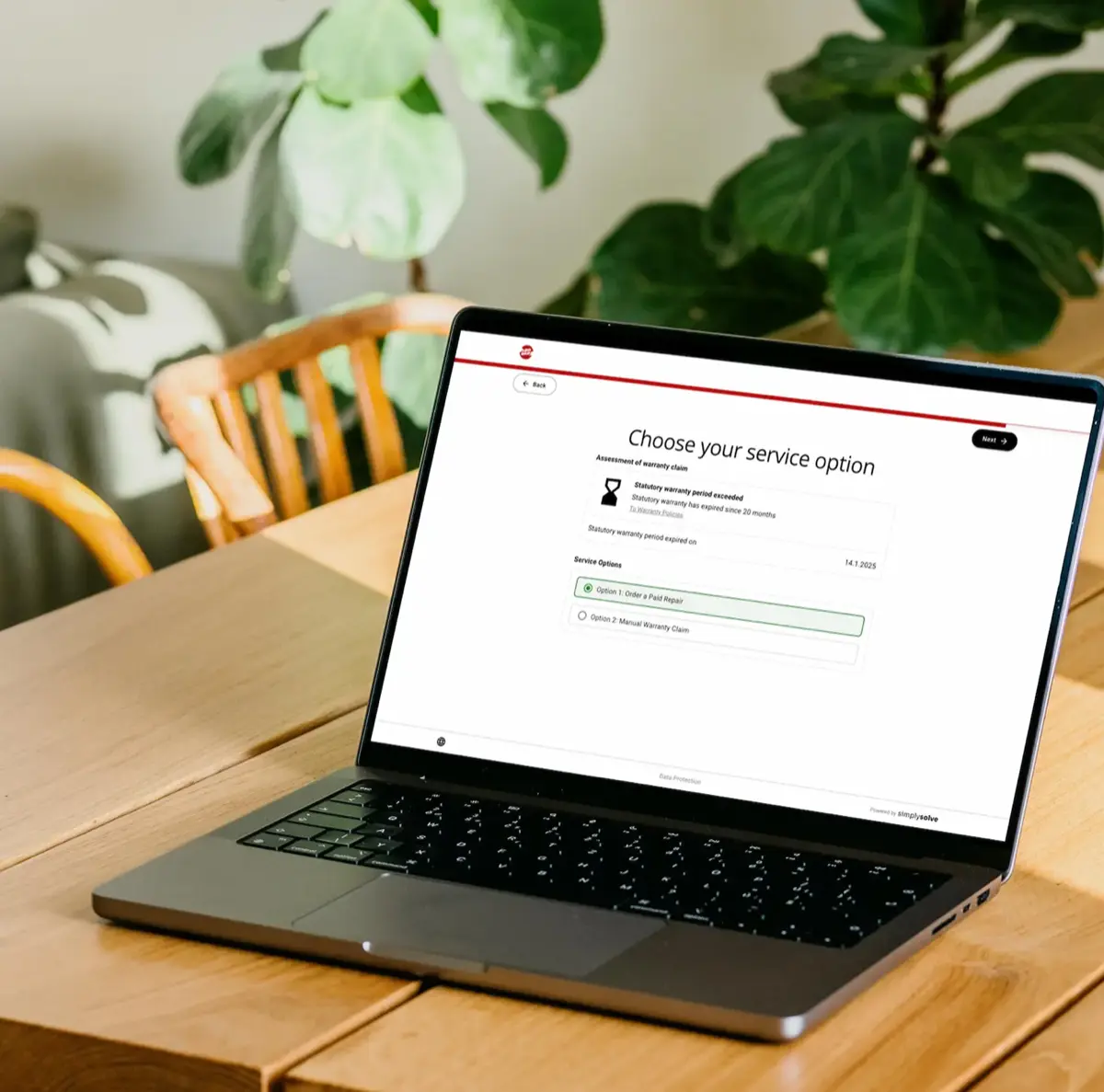
ORTLIEB's repair service was already strong, but spread across separate processes and tools. Now simplysolve brings it all together: every flow offers customers the same options a human support agent would. Built-in rules and automations handle what used to take case-by-case decisions – and have already proven their value.
CHALLENGE
Implicit Rules
Unwritten or complex rules for warranty and repair requests kept leading to inconsistent decisions and unnecessary back-and-forth within the team.
BENEFIT
Standardisation
Clearly standardised rules, applied in real time within the flows, guide requests consistently and efficiently, which saves ORTLIEB's support team valuable time.
CHALLENGE
Clarification Effort
Missing cost approvals and imprecise case descriptions forced the support and repair team into many extra emails and phone calls – a considerable burden, especially when the team was understaffed.
BENEFIT
Solution in Real Time
For 96% of repair requests, customers already receive the solution to their issue during the request process itself – in real time, with no waiting or later follow-up questions. This automation saves everyone involved a great deal of effort.
CHALLENGE
High Repair Caseload
A seasonally sharp rise in repair volumes temporarily overloaded ORTLIEB’s repair team, creating a backlog and longer waiting times for customers.
BENEFIT
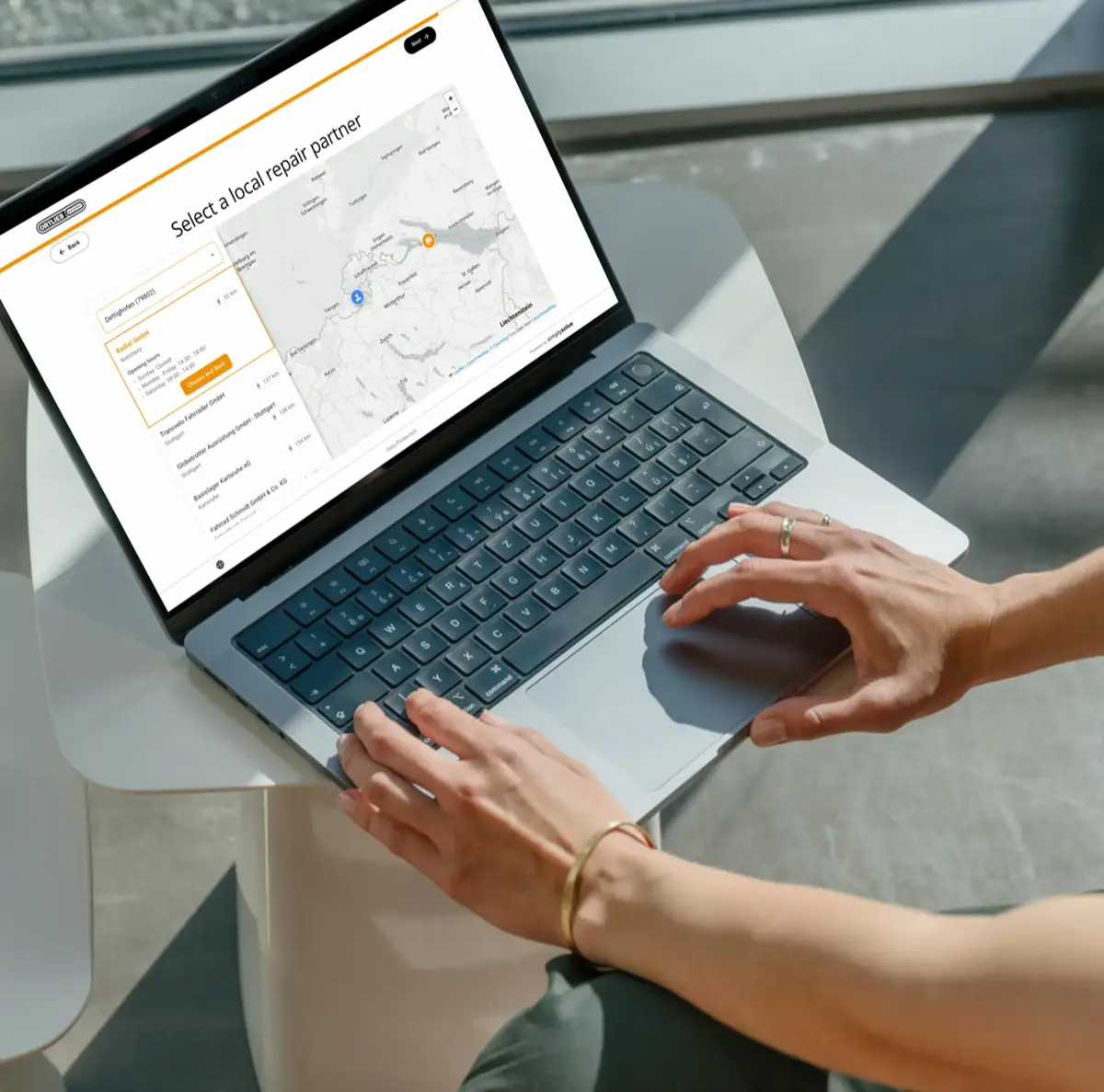
Local Repair
Where a local repair is possible, customers can have it carried out directly by a suitable service retailer nearby. Depending on the distance, up to 50% of customers use this option – solving high caseload and saving costs.
Analyse and improve your warranty costs and repair infrastructure.

All online requests, one consistent process

All digital communication – from retailers and customers across different markets and languages – now reaches Penguin through simplysolve. As a small company, Penguin didn't need complex automation: just moving to structured communication made support faster, clearer and easier to manage – while still keeping the human touch.
CHALLENGE
Multi-Channel Support
Large numbers of calls and emails across different channels used to leave Penguin's whole support team with an unclear, barely traceable picture of the data – and a corresponding amount of internal coordination.
BENEFIT
Consolidation
Because simplysolve is available across different channels, all digital requests now come in consistently through simplysolve and follow a standardised process. This creates clarity for both customers and staff.
CHALLENGE
Sales Tied Up
At small brands, employees have to juggle many tasks at once. Anyone tied up with customer support and emails isn't actively selling during that time – valuable working hours are regularly lost as a result.
BENEFIT
Complete Data Collection
Complete, structured data reduces follow-up questions and can be turned directly into a finished repair order – employees only need to check and forward it.

Structured intake at a single point of access

Every service request at Hanwag is now handled centrally through simplysolve. The flexible layer has become an integral part of Hanwag's IT architecture and service strategy. Hanwag has automated not only the problem analysis but also the downstream operational steps, such as creating shipping labels and Zendesk tickets.
CHALLENGE
Paper-Based Process
The repair process used to be paper-based and quickly became confusing when there were multiple issues or products involved. Retailers, in particular, often sent large packages full of shoes and slips of paper, and sorting them out was often a time-consuming task.
BENEFIT
Structured Case Intake
The digitised process guides retailers and customers step by step through the case intake. This reduces the number of follow-up questions and background checks, because the relevant information is available from the start.
CHALLENGE
Unclear Defect
When the repair team received the boot, it was often unclear which of the two shoes was affected and exactly where the problem lay. Customers' case descriptions are usually too general or too superficial to pinpoint the problem directly. This results in additional follow-up questions and, above all, takes up employees’ time.
BENEFIT
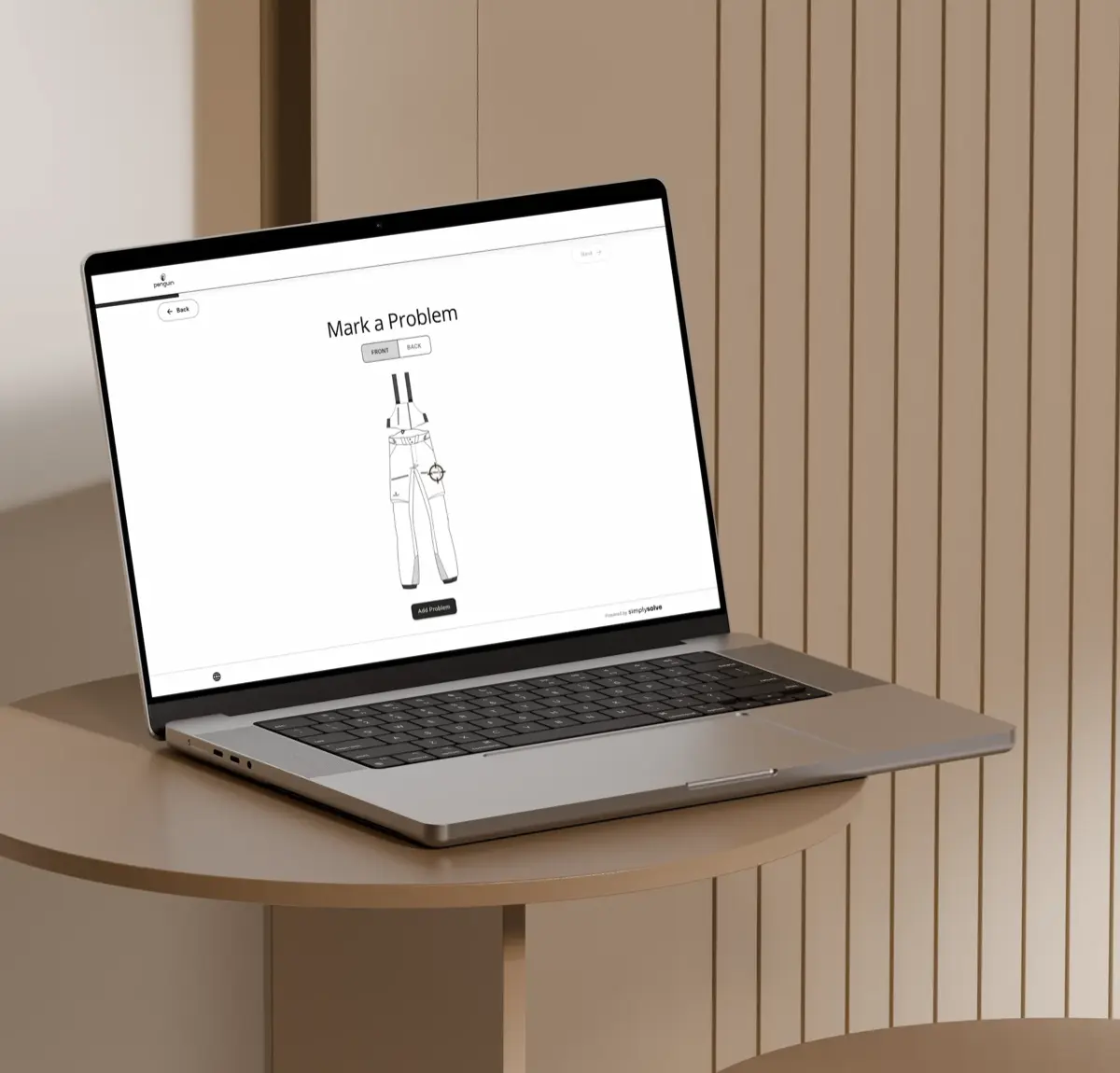
Defect Pinpointing
A specific case record is created for every boot and every defect, including a marker for the problem area in the user interface. This gives the repair team a clear, visually organised handover right from the start so they can process the case as quickly as possible.
Download our Service Checklist
What your service could tell you if you asked the right questions.